
TNPSC Books
-
 TNPSC General English Book - for Group 2 & 2A
Original price was: ₹1,000.00.₹850.00Current price is: ₹850.00.
-
 TNPSC பொதுத் தமிழ் Book - for Group 2, 2A, 3, 4 & VAO
Original price was: ₹1,000.00.₹850.00Current price is: ₹850.00.
Group 1 Courses

Class Tests
PRIVATE 67
TNPSC Group 1 - Test Series - 2019
Original price was: ₹3,500.00.₹2,800.00Current price is: ₹2,800.00. 542
Group 1 | Postal and Online Test Series | 2022
Original price was: ₹3,200.00.₹2,800.00Current price is: ₹2,800.00. 88


Group 2 & 2A Courses
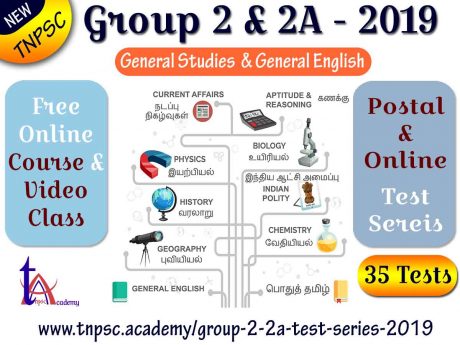
TNPSC Group 2 and 2A - Test Series - 2019
Original price was: ₹2,400.00.₹1,800.00Current price is: ₹1,800.00. 527Class Tests
PRIVATE 67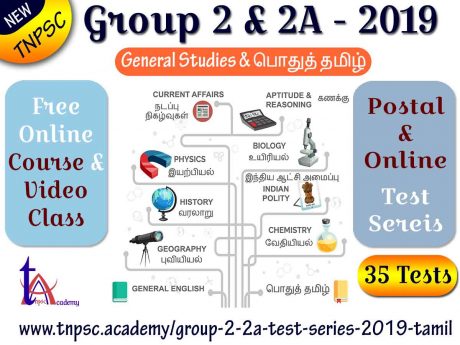
TNPSC Group 2 and 2A - Test Series - 2019 - தமிழ்
Original price was: ₹2,400.00.₹1,800.00Current price is: ₹1,800.00. 175
TNPSC Group 2 and 2A MAINS - 2022
PRIVATE 344


www.tnpsc.academy – TNPSC Current Affairs August 26, 2020 (26/08/2020)
Download as PDF (English)
Topic: International Events, India and its Foreign Relations
India-Vietnam Meeting
Recently, the 17th meeting of India-Vietnam Joint Commission on Trade, Economic, Scientific and Technological Cooperation was held.
Both sides reviewed the recent developments in India-Vietnam Comprehensive Strategic Partnership (since 2016) and discussed the future trajectory of their wide-ranging engagement.
Way Forward:
Vietnam is a key pillar of India’s Act East policy and there is a scope for further cooperation between the countries.
The close relationship between the two countries is significant for the maintenance of strategic balance in South East Asia which is witnessing aggressive Chinese activities.
_
Topic: Space Technology, Geographical Landmarks
Star Formation in Dwarf Galaxies
Recently, astronomers from the Aryabhatta Research Institute of Observational Sciences (ARIES) have found out the reasons behind intense star formation in some dwarf galaxies.
ARIES is an autonomous institute of Department of Science & Technology (DST).
Background:
Amidst the billions of galaxies in the universe, a large number are tiny ones – 100 times less massive than the Milky-way galaxy. Most of these are called dwarf galaxies and form stars at a much slower rate than the massive ones.
Dwarf galaxies are the most abundant type of galaxy in the universe but are difficult to detect due to their low luminosity, low mass and small size.
However, some dwarf galaxies have been seen forming new stars at a mass-normalized rate i.e. 10-100 times more than that of the Milky-way galaxy.
The star-formation activities do not last longer than a few tens of million-years, a period which is much shorter than the age of these galaxies – typically a few billion years.
Reasons Found Out by the Aries Astronomers:
Disturbed Hydrogen Distribution:
Star formation at a high rate requires very high density of Hydrogen in the galaxies. Multiple nuclei and high concentration of ionized hydrogen have been found in the central region of such galaxies.
Hydrogen in these dwarf galaxies is found to be irregular and sometimes not moving in well-defined orbits i.e. non-symmetric distribution of hydrogen.
Galaxy-Galaxy Collision:
Some Hydrogen around these galaxies is also detected in forms of isolated clouds, plumes, and tails as if some other galaxy recently has collided or brushed away with these galaxies, and gas is scattered as debris around the galaxies.
Telescopes Used for the Study:
Scientists used the 1.3-meter Devasthal Fast Optical Telescope (DFOT) near Nainital (Uttarakhand) and the Giant Metrewave Radio Telescope (GMRT) in Maharashtra.
_
Topic: Space Technology, Geographical Landmarks
Early Galaxy Detected by AstroSat
A team of Scientists from the Inter University Centre for Astronomy and Astrophysics (IUCAA) has discovered one of the earliest galaxies called AUDFs01 using AstroSat.
The galaxy is located in the Hubble Extreme Deep field, 9.3 billion light-years away from Earth.
The team comprises scientists from India, Switzerland, France, USA, Japan and Netherlands.
Key facts:
The galaxy was discovered using UltraViolet Imaging Telescope (UVIT) on Astrosat. AstroSat detected Extreme Ultraviolet light from the galaxy.
Earlier, NASA’s Hubble Space Telescope (HST), which is significantly larger than UVIT, did not detect any UV emission from this galaxy because it is too faint.
AstroSat/UVIT was able to achieve this unique feat because the background noise in the UVIT detector is much less than the ones on HST.
These observations lasted for more than 28 hours in October 2016, but it took nearly two years since then to carefully analyse the data to ascertain that the emission is indeed from the galaxy.
Way Forward:
The detection of UV emission from AUDFs01 can help reveal details about the Big Bang, the end of dark ages and the formation of early stars and galaxies and thus give a boost to the ongoing cosmological research.
_
Topic: India and its Neighboring countries
China Launches Warship for Pakistan
Recently, China has launched first of the four advanced naval warships it is building for Pakistan. This is the first ship of Type-054 class frigate.
The Type-054A is roughly the same size as the Indian Navy’s existing Talwar class of frigates, purchased from Russia.
Key facts:
Comparing with Talwar Class:
Size and Dimensions: The Type-054A and Talwar class displace approximately 4,000 tonnes and have a length of around 130 metres.
Stealth Level: Both classes, designed the 1990s, have features to reduce their radar and infra-red signatures.